National Science Olympiad Forum By SOF Olympiad Trainer - Page 709

User Forum

Subject :NSO    Class : Class 9

Ans 1:

Class : Class 9
Can u pls send the method

Ans 2:

Class :

Ans 3:

Class :
9.6

Post Your Answer

Subject :NSO    Class : Class 9

Ans 1:

Class :
The answer is 12cm

Ans 2:

Class : Class 10
the answer is 12 cm

Ans 3:

Class :
The answer is 12cm

Post Your Answer

Subject :NSO    Class : Class 8

Ans 1:

Class : Class 8
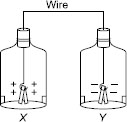
The options given here are a plastic scale,a woollen cloth, an inflated balloon and a COPPER rod, not a GLASS rod. How can the options appear differently for others, since many people here are saying that there is glass rod involved? Also, plastic is an insulator of electricity, so ideally it wouldn't acquire any charge, right? SOF should give a solution to this problem.


Ans 2:

Class : Class 8
Answer is A... positive charge is acquire by the glass rod

Ans 3:

Class : Class 6

Ans 4:

Class : Class 9
glass rod when rubbed with fur, it gives electrons to fur and becomes positively charged

Ans 5:

Class : Class 5

Ans 6:

Class : Class 8
positive charge is acqired

Ans 7:

Class :
When rubbed with fur, glass will become negatively charged. However if silk is used instead of fur, glass will acquire a positive charge.

Ans 8:

Class : Class 8
Plastic is unable to be charged.. Wrong answer!

Ans 9:

Class : Class 8
This is wrong, yet nothing has been done to fix it. It has been discovered to be wrong FOUR YEARS ago!

Post Your Answer

Subject :NSO    Class : Class 8

Ans 1:

Class : Class 10
Protons don't move.

Ans 2:

Class : Class 10

Ans 3: (Master Answer)

Class :
The correct answer is C.

Ans 4:

Class : Class 10

Ans 5:

Class : Class 5
Why

Post Your Answer

Subject :NSO    Class : Class 5

Ans 1:

Class : Class 8
It should be option C. It should be discouraged.

Ans 2:

Class :
D

Ans 3:

Class :
D

Post Your Answer

Subject :NSO    Class : Class 4

Ans 1:

Class :
B

Post Your Answer

Subject :NSO    Class : Class 10

Ans 1: (Master Answer)

Class :
The correct answer is D.

Post Your Answer

Subject :NSO    Class : Class 5

Ans 1:

Class : Class 4
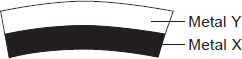
ans should be D as if metal x contracts and metal y expands then the 2 metals will bend inward an as an ellusion we see that y is longer than x

Ans 2:

Class : Class 8
D or B not sure.

Ans 3:

Class : Class 3
All metal expands on heating. Here metal Y expands more which leads to curling of both X and Y. B is the correct option.

Ans 4:

Class : Class 1
The answer is B because the question says that he HEATED both the metals (most metals expand on heating) and Y has expanded more than X

Ans 5:

Class : Class 4
iron-nickel alloy notable for its lack of expansion or contraction with temperature changes. hence all metals do NOT expand

Ans 6:

Class : Class 5
D or B? please vote

Ans 7:

Class : Class 9
d

Ans 8:

Class : Class 3

Ans 9:

Class : Class 5
as if we will contract metal x so it is not neccessery that y will contract if we contract metal y x has to be conyracted with it ans should be a

Ans 10:

Class :
cONFUSED IN d AND B

Ans 11:

Class : Class 4
sof does not reply that is why we are confused

Ans 12:

Class :
b

Ans 13:

Class :
b as Y expands more

Ans 14:

Class : Class 9
B m kids because Y is only curled much . dont get angry

Ans 15:

Class : Class 10
B

Ans 16:

Class : Class 9
B because if Y expands and X contracts, X will be a lot smaller than Y. Here, both are almost the same size.

Ans 17:

Class : Class 7
Sumit Singhal , this is a bimetallic metal . Here , the two metals cannot go away from each other . So here , if y expands than x will also expand , and if x expands than y will also expand . I am getting confusion between A and B .

Ans 18:

Class : Class 8
The answer should be opt.B

Ans 19:

Class : Class 3
b

Ans 20:

Class :
C is the correct answer

Ans 21:

Class : Class 5
B is the correct answer

Ans 22:

Class : Class 9
B is the answer

Ans 23:

Class : Class 5
B is the right answer

Ans 24: (Master Answer)

Class :

Ans 25:

Class : Class 7
B is the answer to this question

Post Your Answer

Subject :NSO    Class : Class 8

Ans 1:

Class : Class 9
It has to be A.

Ans 2:

Class : Class 9
Yes the answer is A

Ans 3:

Class :
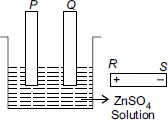
cation(Zn2 ) must be deposited to the cathode.

Ans 4:

Class : Class 10
my apologies for the previous explanation answer is : C

Ans 5:

Class : Class 7
i do feel that correct answer is A.as P has to be electroplated ,it must be on cathode(-ve).so,correct is =A

Ans 6:

Class : Class 8
Yes it should be A .

Ans 7:

Class : Class 9

Ans 8:

Class :
WWWWRRRROOOONNNNNNNNNNGGGGGGGGGGGGGGGGG

Ans 9:

Class :
the answer will be 'A'

Ans 10:

Class : Class 8
Answer is a

Ans 11:

Class : Class 8
it should be a

Ans 12:

Class : Class 9
I will go mad with the number of wrong answers in this website.. answer should be a. For example when a spoon has to be electroplated with copper, copper is ALWAYS ON ANODE and the spoon is ALWAYS ON CATHODE. Why different logic is used here?

Ans 13:

Class : Class 8
A

Ans 14:

Class : Class 10
thus answer is a

Ans 15:

Class : Class 9
The correct answer is AAAAAAA

Ans 16:

Class : Class 6
answer should be A, as hydrogen is not released at cathode if the other cation is Zinc or below in the electrochemical series

Ans 17:

Class : Class 10
the answer is wrong.....it should be a

Ans 18:

Class : Class 10
In reactivity series hydrogen is below zinc and is less reactive than zinc. As hydrogen below zinc therefore will reduce more and earlier than zinc , hence will go to cathode and zinc will reduced or deposit at anode. therefore P will be connected to R and Q to S.hence ans is :C

Ans 19:

Class : Class 8
answer is a

Ans 20:

Class : Class 5
And for this question must be A

Ans 21:

Class : Class 10

Ans 22:

Class : Class 10
What is the correct answer A or C ???????

Ans 23:

Class : Class 9
answer A

Ans 24:

Class : Class 8
Yes it is A

Post Your Answer

Subject :NSO    Class : Class 3

Ans 1:

Class : Class 3
B

Ans 2:

Class :

Post Your Answer