Subject :NSO Class : Class 1
Subject :NSO Class : Class 5
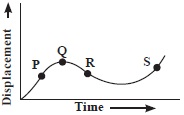
Identify the parts labelled as P, Q, R and S in the figure and select the correct option.
| P | Q | R | S | |
|---|---|---|---|---|
| A | Cerebrum | Medulla | Skull | Cerebellum |
| B | Skull | Cerebrum | Cerebellum | Medulla |
| C | Medulla | Cerebellum | Cerebrum | Skull |
| D | Cerebellum | Skull | Medulla | Cerebrum |
Ans 1:
Class : Class 6
P shows head Q show cerebrum R shows cerebellum and S shows medulla oblongata . Hence b is the correct Answer
Post Your Answer
Subject :NSO Class : Class 1
Post Your Answer
Subject :NSO Class : Class 1
Each of the following observations tells us what living things can do. Which of the following have been wrongly paired?
| Observations | Living things can | |
| 1. | A rabbit gives birth. | Grow |
| 2. | A caterpillar turns into pupa and then into a butterfly. | Reproduce |
| 3. | A bee flies from one flower to another. | Move |
| 4. | A leaf withers and turns brown. | Die |
A 1 only
B 1 and 2 only
C 1 and 4 only
D 1, 3 and 4 only
Post Your Answer
Subject :NSO Class : Class 1
Look at the classification table below.
Which of the following options identifies X, Y and Z correctly?
| X | Y | Z | |
| A | Orchid | Steel ruler | Plastic spoon |
| B | Seed | Paper cup | Wooden chair |
| C | Flour | Dolphin | Stone |
| D | Lizard | Wooden chair | Gold earrings |
Post Your Answer
Subject :NSO Class : Class 9
Match the column I with column II and select the correct option from the codes given below.
| Column I | Column II |
| (A) g at height h | (i) |
| (B) g at depth h | (ii) |
| (C) gpoles | (iii) |
| (D) g | (iv) Maximum |
A (A) - (i), (B) - (ii), (C) - (iii), (D) - (iv)
B (A) - (ii), (B) - (iii), (C) - (iv), (D) - (i)
C (A) - (i), (B) - (iii), (C) - (iv), (D) - (ii)
D (A) - (ii), (B) - (iv), (C) - (i), (D) - (iii)
Post Your Answer
Subject :NSO Class : Class 2
Post Your Answer
Subject :NSO Class : Class 7
Observe the given reaction carefully and fill in the blanks by choosing an appropriate option.
Fe(s) + CuSO4(aq) → FeSO4(aq) + Cu(s)
Before reaction, iron is (i) in colour and solution is (ii) in colour. After reaction iron gets (iii) deposits and the solution becomes (iv) in colour.
| (i) | (ii) | (iii) | (iv) | |
| A | Grey | Colourless | Red | Blue |
| B | Red | Blue | Grey | Green |
| C | Grey | Blue | Brown | Green |
| D | Red | Colourless | Grey | Green |
C is the answer