Subject :NSO Class : Class 10
Here, the answer is D.
The method used to extract metals from the ore in which they are found depends on their reactivity. For example, reactive metals such as aluminium are extracted by electrolysis, while a less-reactive metal such as iron may be extracted by reduction with carbon or carbon monoxide.
The metals low in the reactive series are very less reactive. The oxides of such metals can be reduced to metals by heating alone e.g. mercury is obtained from its ore, cinnabar (HgS), by the process of heating.
Metals like iron, zinc, lead etc. occur as sulphides or carbonates in nature. First the ore is converted into its oxide form This is done by either roasting or by calcination. The metal oxide is reduced to metal by using suitable reducing agent such as Carbon.
Subject :NSO Class : Class 5
Ans 1:
Class : Class 6
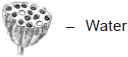
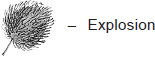
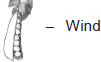
A - Cocklebur : Dispersed by animalB - Hiptage : Dispersed by windC - Dandelion : Dispersed by windD - Coconut : Dispersed by water
Ans 2: (Master Answer)
Ans 8:
Class : Class 5
Option A shows - Dandelion, dispersed by animals B shows- Lotus seeds, dispersed by water C shows- Xanthium , dispersed by explosion And, D shows- Peas, dispersed by wind.Among these, only option B , which is ' lotus seeds, dispersed by water' is correct, therefore option B is the correct answer.
Post Your Answer
Subject :NSO Class : Class 10
Post Your Answer
Subject :NSO Class : Class 2
Post Your Answer
Subject :NSO Class : Class 8
Post Your Answer
Subject :NSO Class : Class 3
Post Your Answer
Subject :NSO Class : Class 6
Ans 2:
Class : Class 6
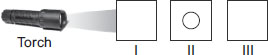
its c as transparent object 1 will allow light ti pass. opaque object 2 wont allow anything to pass and will make a patch of light and the last could be anything
Ans 3:
Class : Class 8
No, the right answer is opt. c because if II is translucent, then it will NOT GET A CLEAR BRIGHT SPOT but a hazy one.
Ans 5:
Class : Class 6
it could be b too as it is not clear that if it has any problem in it like hazy r said if its clear
Ans 6:
Class : Class 9
IF [I] WILL BE TRANSPARENT ,AS WE KNOW THAT THE MATERIALS WHICH ALLOW LIGHT TO PASS THROUGH THEM ARE CALLED TRANSPARENT SO IF WE CUT OUT A SQUARE TRANSPARENT SHEET FROM A ROLL OF TRANSPARENT ,SURELY THE LIGHT PATCH WILL PASS THROUGH[II]THEN THE [II] MATERIAL SHOULD BE SOMETING WHICH CAN NOT ALLOW LIGHT TO PASS TROUGH IT IT SHOULD BE OPAQUE AND THE LAST SQUARE[III] CAN BE MADE OUT FROM ANY MATERIAL,THUS IT WILL NOT CHANGE THE ANSWER.SO WE CONCLUDE THE CORRECT ANSWER IS C
Ans 7:
Class : Class 8
No, the right answer is opt. c because if II is translucent, then it will NOT GET A CLEAR BRIGHT SPOT but a hazy one.
Post Your Answer
Subject :NSO Class : Class 4
Ans 10:
Class : Class 4
there is no necessity of mentioning the words: "descending order". This is contradictory to the statement: A>B>C>D. Hence the question is wrong.
Ans 13:
Class : Class 5
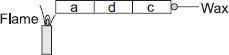
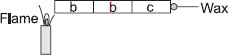
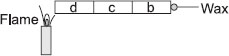
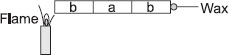
That answer is D as b,a and b are the best conductors of heat so the heat would pass through b,a and b faster and it is balanced.Nice question.
Ans 14:
Class : Class 7
That answer is D as b,a and b are the best conductors of heat so the heat would pass through b,a and b faster and it is balanced.Nice question.
Post Your Answer
Subject :NSO Class : Class 2
Post Your Answer
Subject :NSO Class : Class 6
Consider the following statements (i) - (iv) and select the option that correctly identifies true (T) and false (F) ones.
(i) Sucrose is the sugar found in milk.
(ii) Saturated fats are solids at room temperature while unsaturated fats are liquids.
(iii) Fat soluble vitamins are not stored in our body and need to be regularly supplied through food.
(iv) Vitamin C is very sensitive to heat and is easily destroyed during cooking.
(v) Our body can make two vitamins, i.e., vitamin K and vitamin D.
| (i) | (ii) | (iii) | (iv) | (v) | |
| A | T | F | F | T | T |
| B | F | T | F | T | T |
| C | T | T | F | T | T |
| D | F | F | F | T | T |